
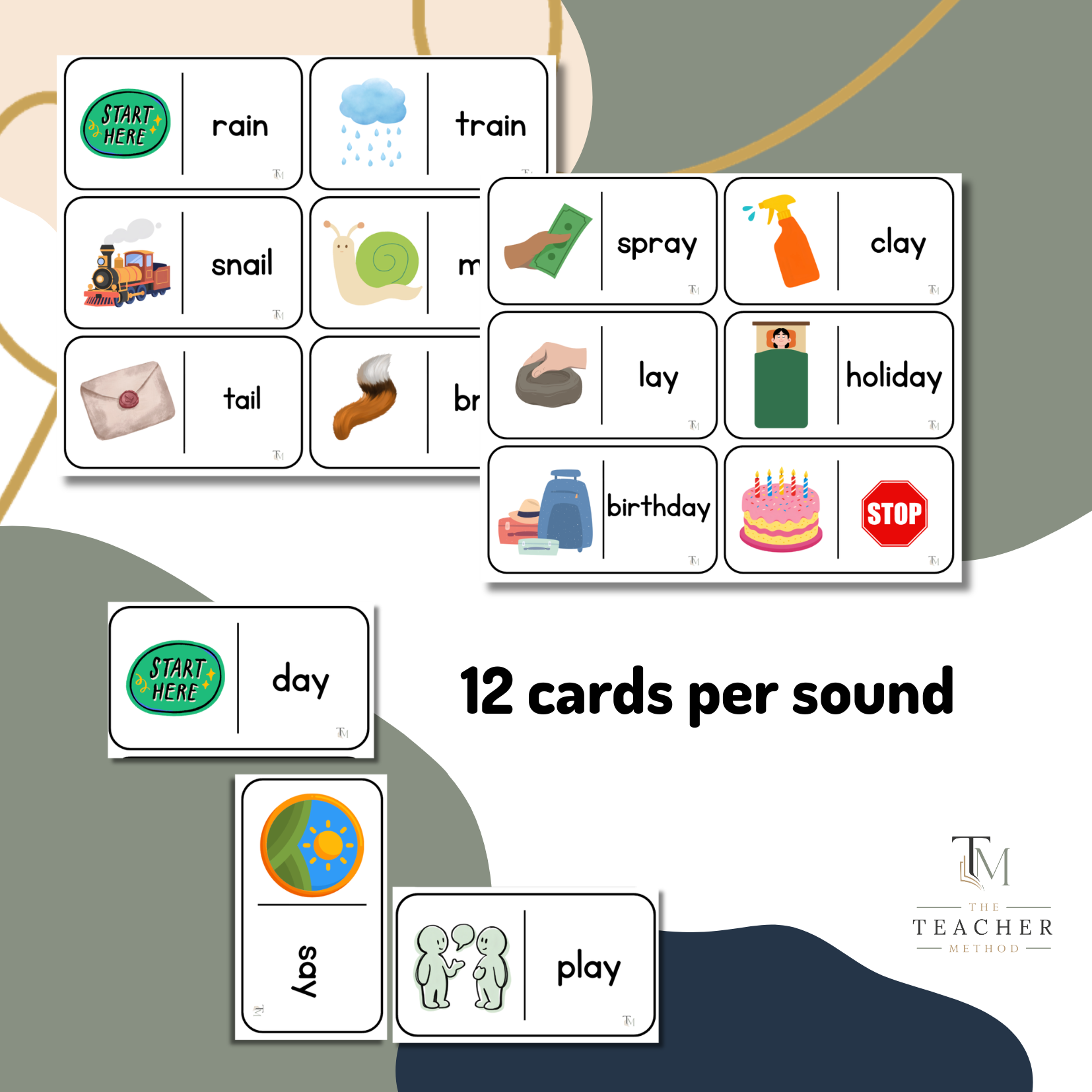
Make phonics practice fun and interactive with these AY, AI and A_E phonics domino cards, designed to help children recognise and read words containing different spellings of the long /ā/ sound.
Children match the dominoes by connecting words and pictures, providing an engaging way to practise phonics while developing word recognition and reading confidence.
🔤 AY Dominoes
12 cards featuring words containing the AY spelling pattern.
🔤 AI Dominoes
12 cards featuring words containing the AI spelling pattern.
🔤 A_E Dominoes
12 cards featuring words containing the A_E spelling pattern.
🖼️ Picture Support
The cards include picture representations to support children in identifying and reading the words.
Phonics lessons
Word reading
Phonics stations
Partner activities
Small-group work
Independent practice
Consolidating alternative spellings
Comparing AY, AI and A_E
Early finishers
Repeated phonics practice
Use the dominoes as a partner game, small-group activity or independent matching task to give children repeated opportunities to recognise and read words containing the target graphemes.
Match it. Read it. Learn the pattern.
Digital resource — no physical product will be delivered.
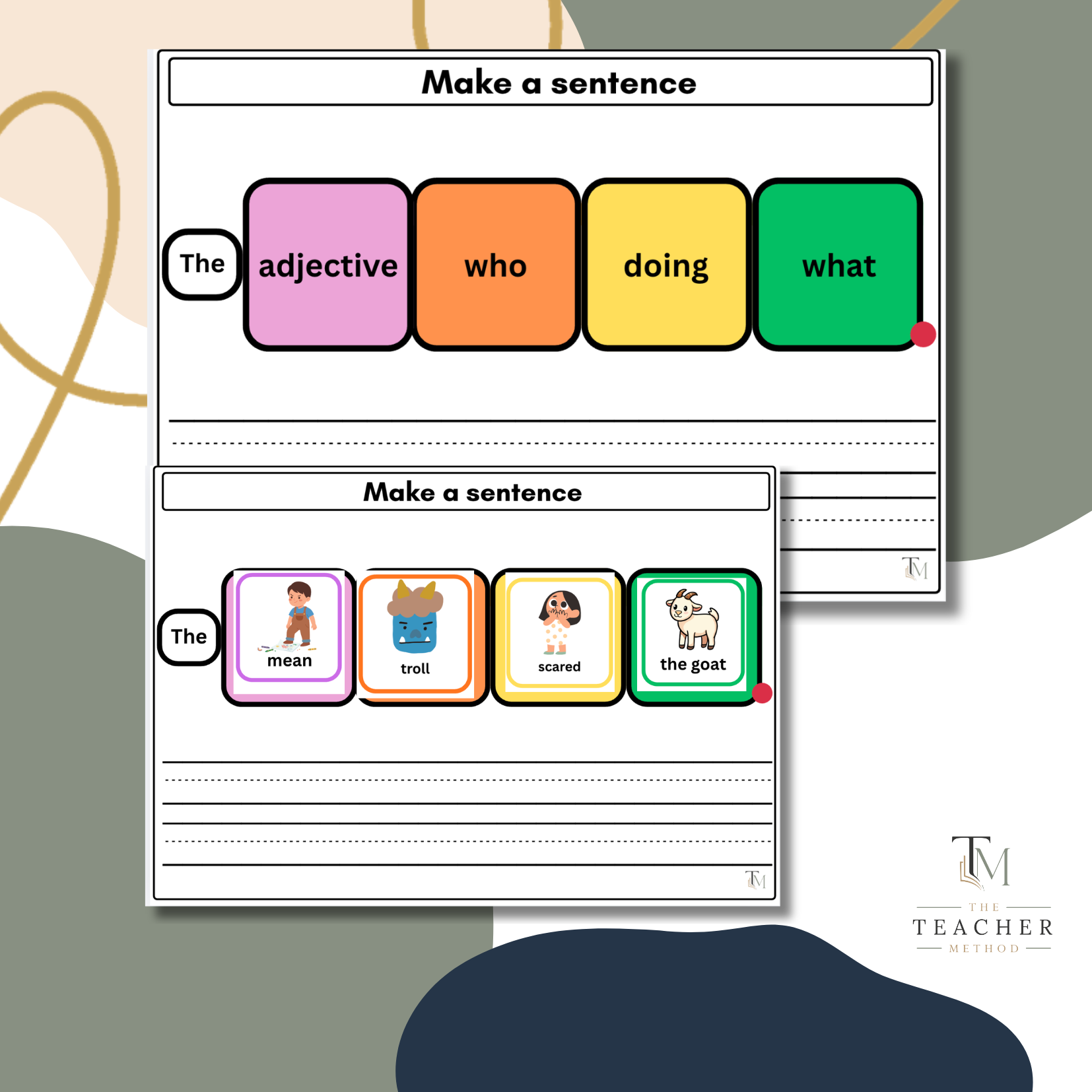
Support children to develop sentence structure, vocabulary and descriptive language with this engaging Billy Goats Gruff Colourful Semantics resource.
Designed around the familiar story, these activities encourage children to build sentences by identifying and arranging different parts of a sentence before writing their completed sentence independently.
🐐 Adjective + Who + Doing
Children build sentences using an adjective to describe the character, followed by who they are and what they are doing.
✏️ Adjective + Who + Doing + What
A more detailed option that encourages children to expand their sentences by adding what the character is doing or interacting with.
🧩 Sentence Building Cards
Children arrange the colour-coded cards in the correct order to construct their sentence.
📝 Write the Sentence
Once the sentence has been built, children write it on the lines provided underneath, reinforcing the connection between sentence structure and independent writing.
♻️ Laminate & Reuse
Simply laminate the top sheet and use the cards alongside it again and again. Children can arrange, rearrange and build different sentences before recording their ideas.
Colourful Semantics
Sentence building
Sentence expansion
Descriptive language
Adjective practice
Oral language
Early writing
Literacy stations
Guided writing
Story-based activities
The Billy Goats Gruff topic work
Supporting children who benefit from visual sentence structures
The two levels provide flexibility, allowing children to begin with a simple Adjective + Who + Doing structure before progressing to Adjective + Who + Doing + What.
Build it. Say it. Write it.
Digital resource — no physical product will be delivered.
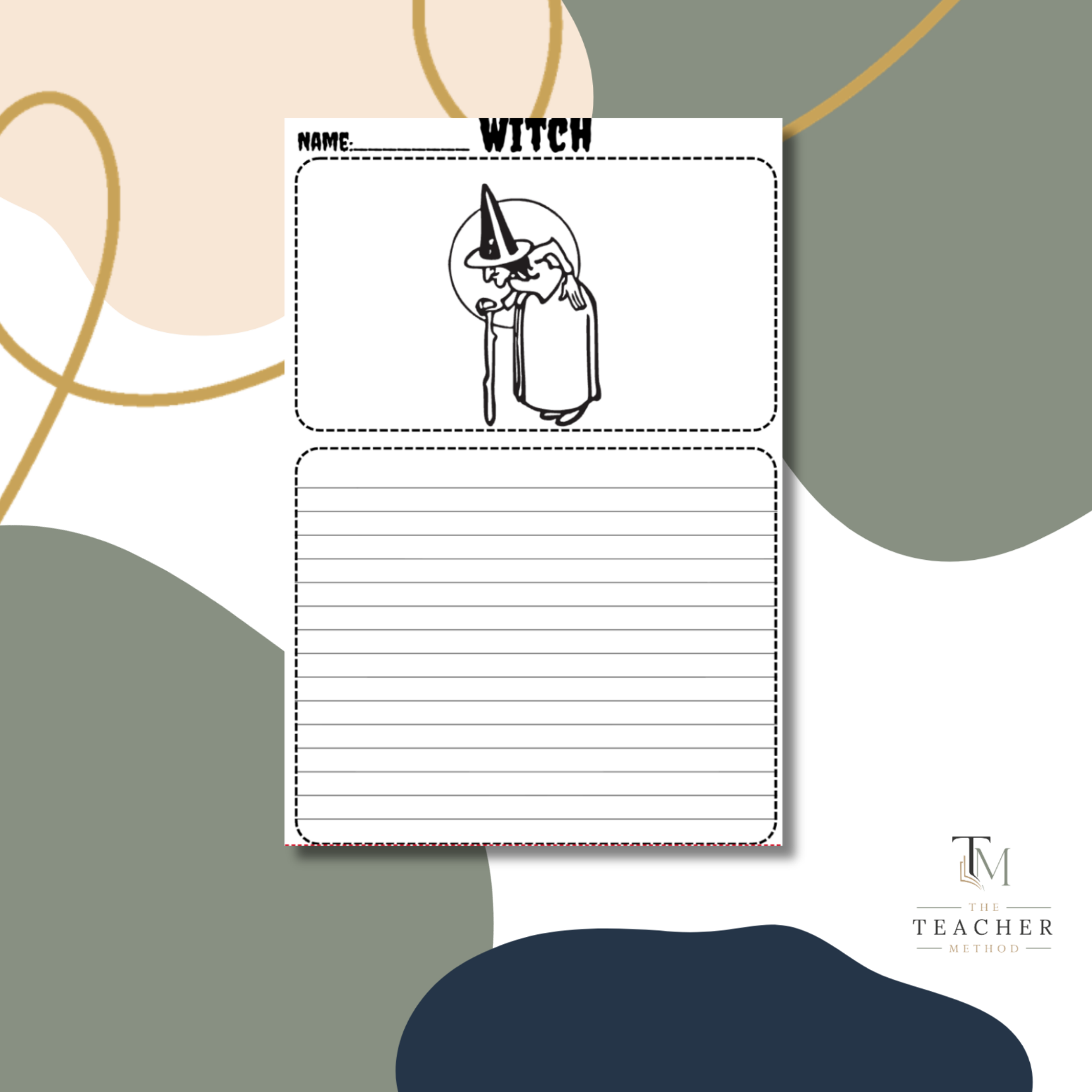
Make Halloween writing simple, creative and engaging with this ready-to-print Halloween Writing Bundle, packed with fun activities designed to encourage children to develop their descriptive language and creativity.
These low-prep writing activities are perfect for independent work, early finishers, writing for enjoyment or literacy centres — giving children the opportunity to write creatively while you save valuable preparation time.
The activities encourage children to use descriptive language and show, rather than tell, when developing characters, settings and imaginative ideas.
🏚️ Draw & Describe Templates
Children can draw and describe a:
Haunted house
Witch
Wizard
Fairy
Potion
Each template comes with 3 line-spacing options, as well as an option for children to colour the provided picture or create their own drawing.
🧙 Create a Halloween Spell or Potion
Children can invent their own spooky spell or potion, developing imaginative vocabulary and descriptive writing. Includes 2 line-spacing options.
🎃 Halloween Acrostic Poems
Fun Halloween-themed acrostic poem templates that encourage children to experiment with vocabulary and creative word choices. Includes 2 line-spacing options.
Independent writing
Writing for enjoyment
Literacy centres
Early finishers
Fast finishers
Creative writing
Descriptive writing
Developing vocabulary
Character and setting description
Halloween activities
The variety of templates means you can choose the activity that best suits your learners, while the different line-spacing options make it easy to adapt the resource to different writing abilities.
🎃 No prep. Ready to print. Ready to write.
Save yourself time this Halloween with a creative writing bundle that children will actually want to use!
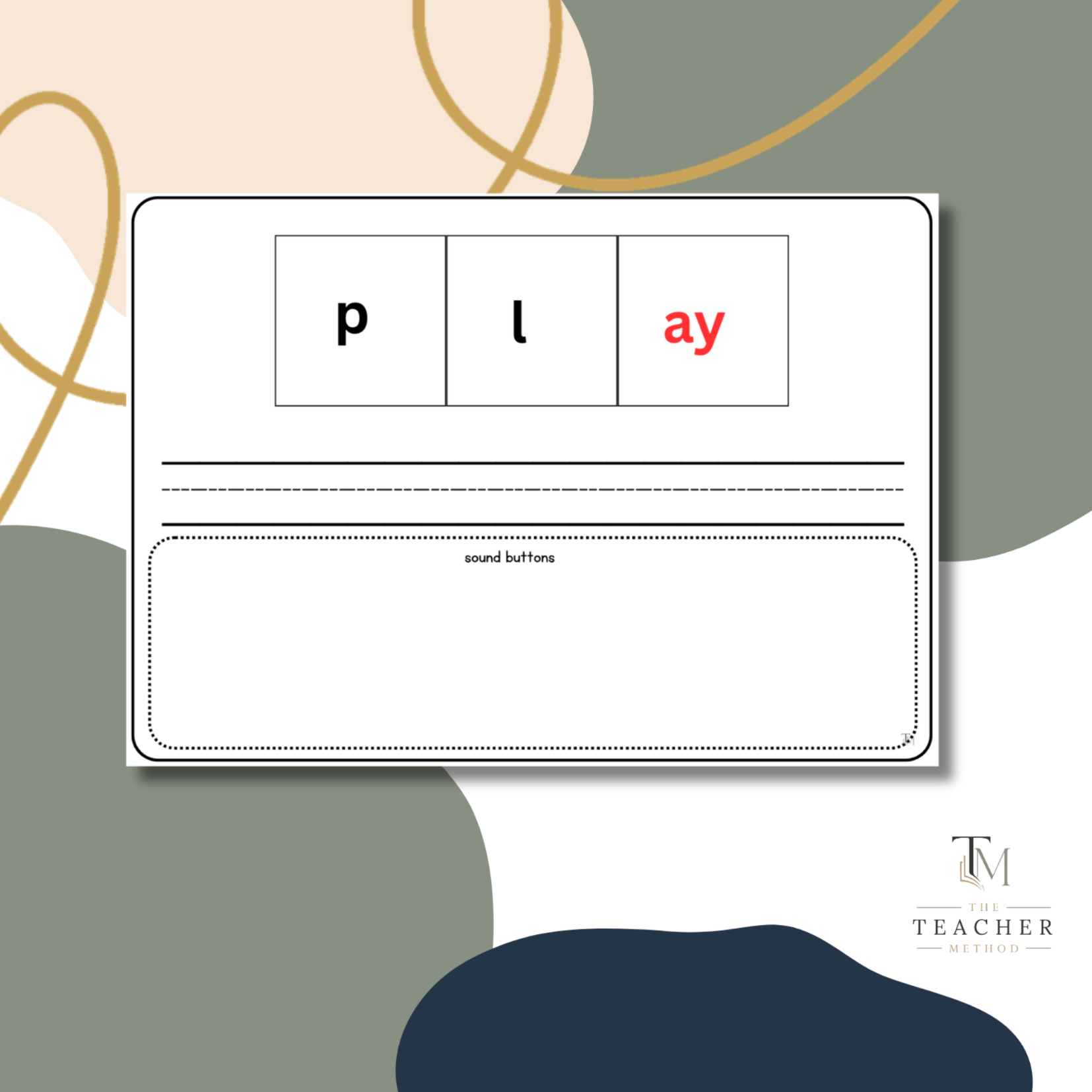
Support phonics, blending and handwriting with these hands-on, reusable sound button mats, designed to help children hear, segment and blend words in a clear and engaging way.
The mats combine Elkonin boxes, sound buttons and handwriting lines, with additional space for children to use playdough or another manipulative to physically create their sound buttons.
🔴 Elkonin Boxes
Children can identify the individual phonemes they hear and represent each sound in the corresponding box.
🟠 Make Your Own Sound Buttons
Use the dedicated space to add playdough or another tactile material and create the sound buttons. Children can push each button as they say the sound, helping them track each phoneme and blend the sounds together.
✏️ Handwriting Lines
Children can then practise writing the word, reinforcing the connection between the sounds they hear and the graphemes they write.
♻️ Laminate & Reuse
Simply laminate the mats and use with playdough, counters, dry-wipe pens or other classroom manipulatives. Wipe clean and use again and again!
Phonics lessons
Segmenting and blending
Elkonin box activities
Phoneme manipulation
Sound-to-letter correspondence
Word building
Blending practice
Handwriting practice
Fine motor development
Literacy stations
Independent practice
Phonics intervention and consolidation
The tactile element makes these particularly useful for children who benefit from physically moving, pressing or manipulating something as they say each sound.
Make it. Say it. Blend it. Write it.
Digital resource — no physical product will be delivered.
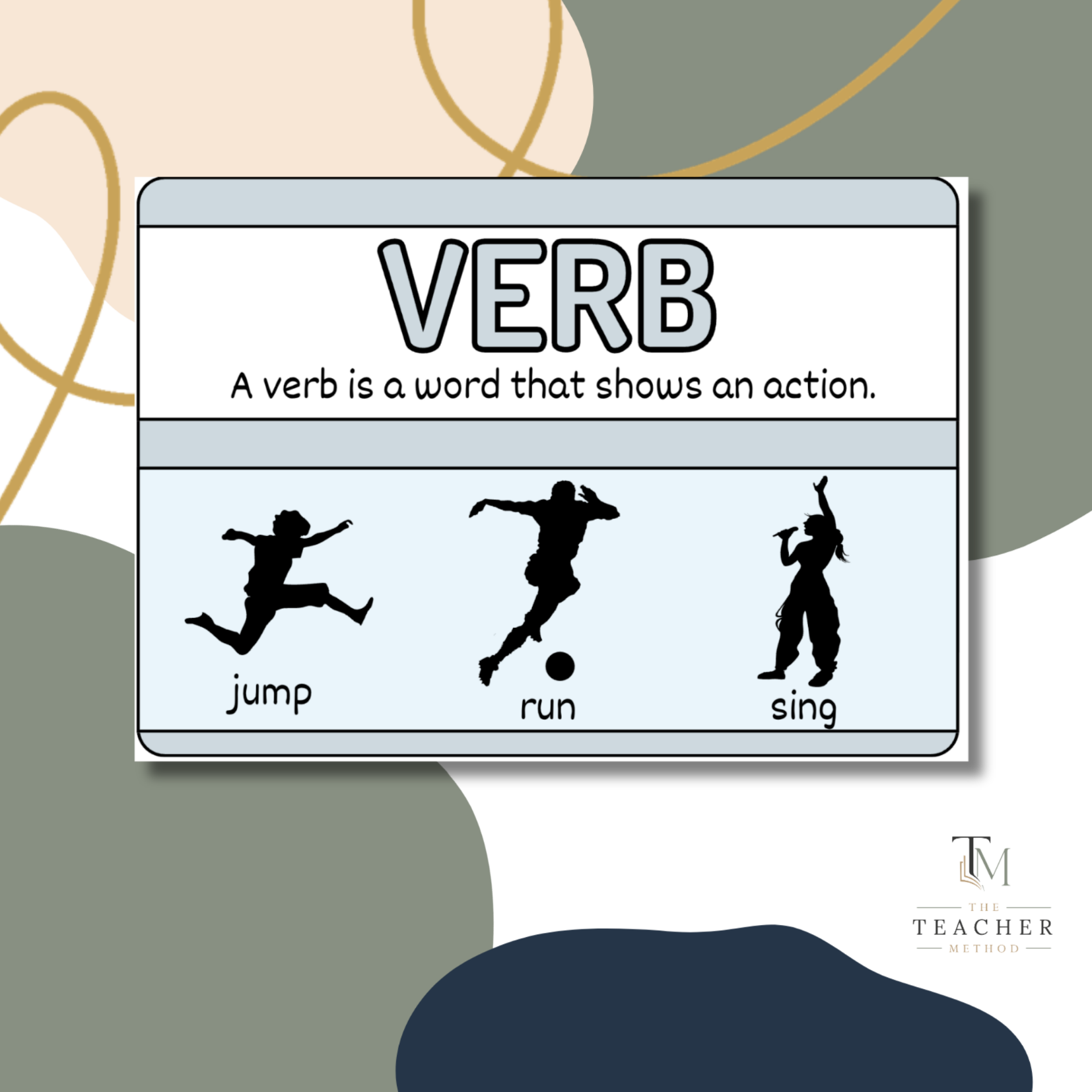
Brighten up your grammar displays with these Parts of Speech classroom posters, designed to help children recognise and understand key parts of speech through clear examples.
Use the posters to create a parts of speech bulletin board, add them to your existing grammar anchor charts, or display them around your classroom as an easy visual reference.
🔵 Picture Example Posters
Noun, Verb, Adverb, Adjective, Pronoun and Proper Noun posters featuring clear picture examples to help children make connections between the word type and its meaning.
✏️ Sentence Example Posters
Noun, Verb, Adverb, Adjective, Pronoun and Proper Noun posters featuring example sentences to show each part of speech in context.
🖨️ Black & White Versions
Black and white versions of all posters are included, allowing you to print them onto your own coloured or neon paper.
Grammar displays
Parts of speech bulletin boards
Literacy classrooms
Grammar anchor charts
Writing lessons
Grammar reference areas
Introducing parts of speech
Revisiting grammar skills
Mix and match the posters to create a display that works for your classroom, or use the different versions throughout the year as you introduce and revisit each part of speech.
Colourful. Clear. Classroom-ready.
Digital resource — no physical product will be delivered.
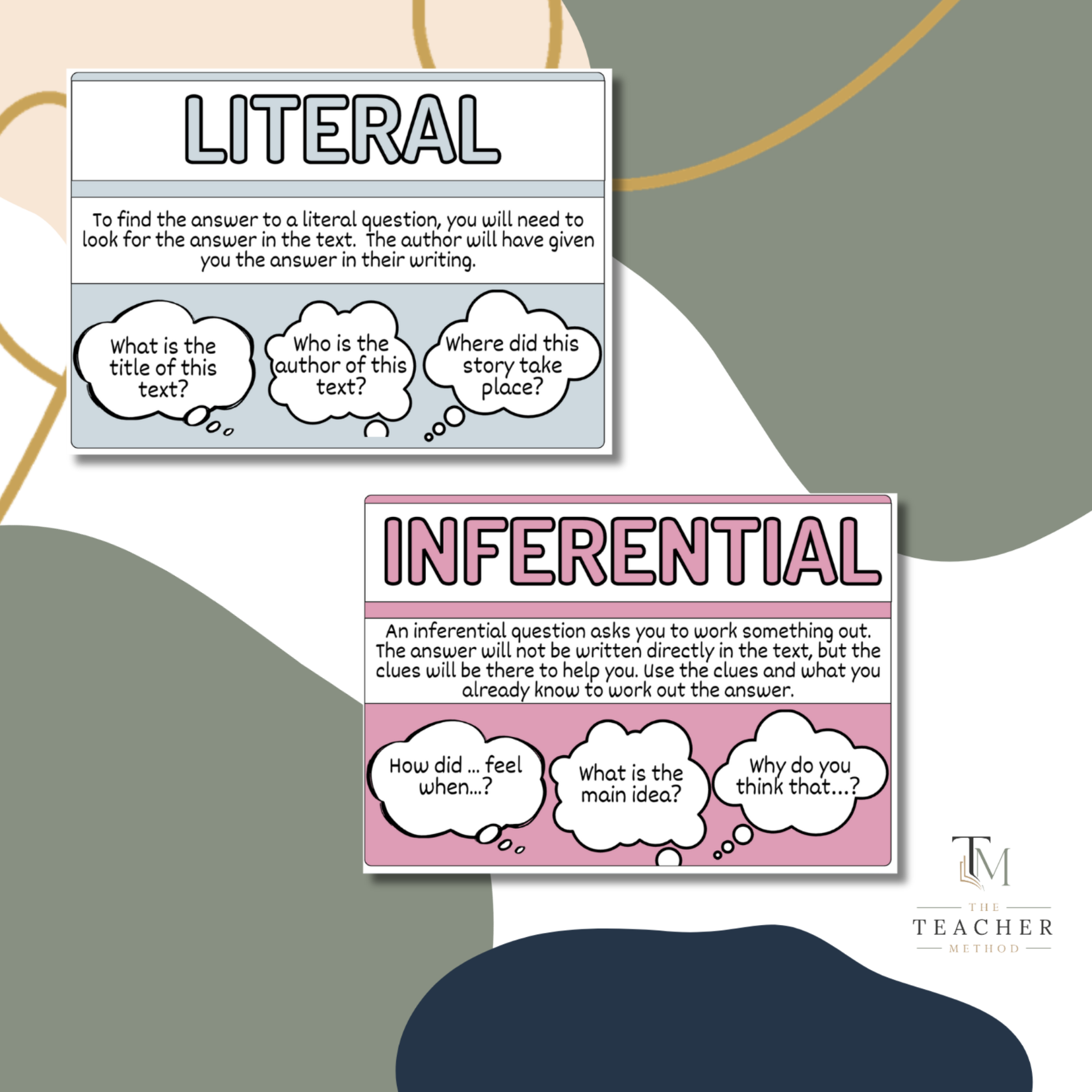
Help children understand the different types of questions they may encounter when reading with this set of Literal, Inferential & Evaluative Questions classroom posters.
With a dedicated poster for each question type, this resource provides a clear and accessible visual reference that can be displayed in your classroom and revisited throughout the year.
📖 Literal Questions Poster
Explains that literal questions ask children to find information that is stated directly in the text.
🔎 Inferential Questions Poster
Explains that inferential questions require children to use clues from the text alongside their own thinking to work out an answer.
💭 Evaluative Questions Poster
Explains that evaluative questions ask children to form an opinion, make a judgement or evaluate something, using evidence from the text to support their ideas.
Guided reading displays
Whole-class reading
Reading comprehension
Literacy classrooms
Reading corners
Reading skill displays
Teaching questioning skills
Developing reading comprehension
Supporting higher-order thinking
Display the three posters together to create a simple reading question reference display, or use each poster individually while introducing and teaching the different question types.
The posters can also be used alongside reading task cards, comprehension worksheets and other reading resources to reinforce children's understanding of how different questions require different types of thinking.
Three question types. Three ways of thinking. One simple classroom display.
Digital resource — no physical product will be delivered.
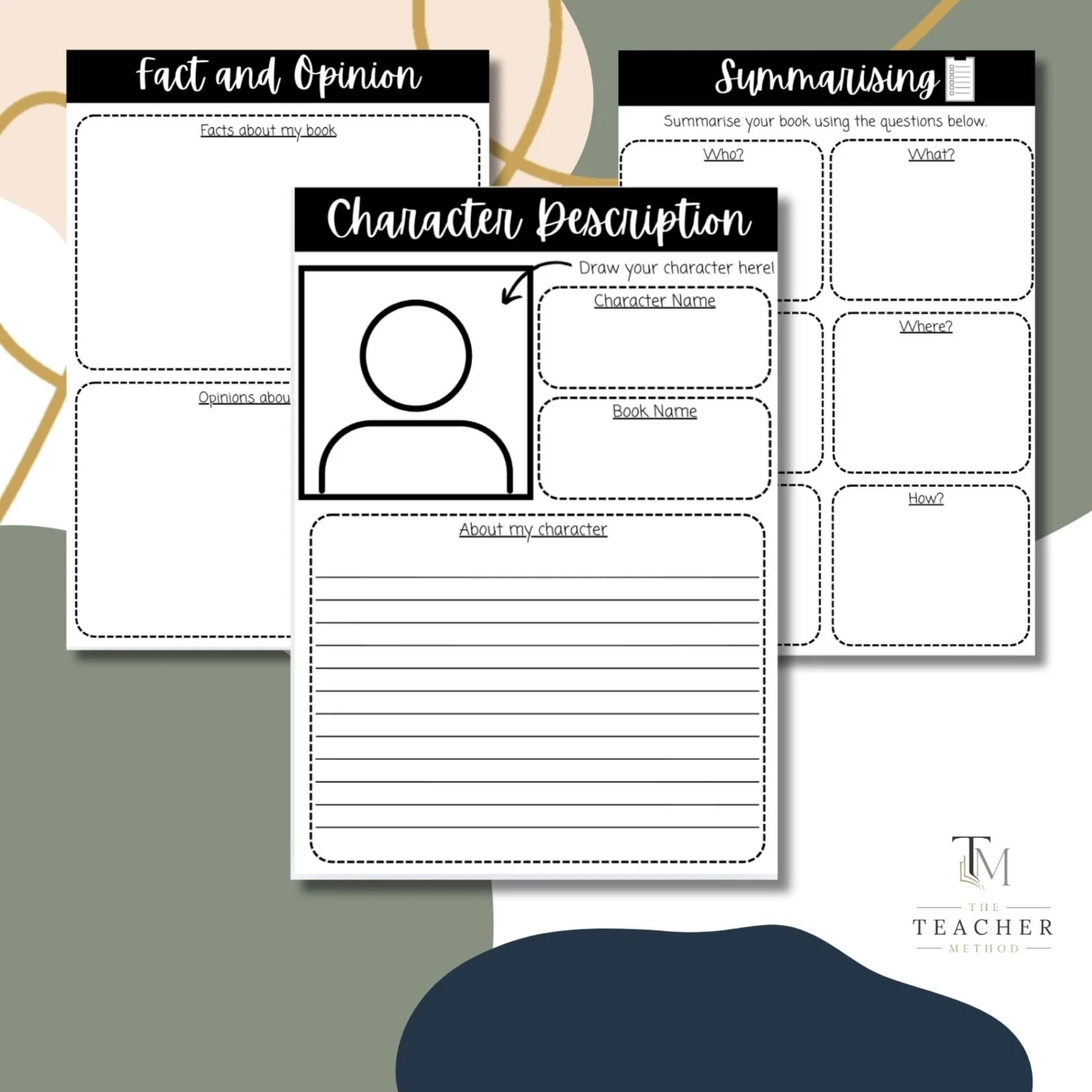
Make guided reading planning simple with this ready-to-use collection of reading worksheets, designed to focus on key reading skills and work with any book or text.
Perfect for approximately P3–P5, these flexible worksheets can be used throughout the school year as guided reading activities, independent tasks, literacy stations or short-burst comprehension activities.
Unlike resources based around a specific story, these worksheets are designed to work with any book your students are reading, meaning you can reuse them again and again across different texts.
🔎 Finding Information
Setting and character activities to encourage children to locate and identify key information from their reading.
🔤 Parts of Speech
Activities focusing on identifying verbs, nouns and adjectives within the text.
📝 Summarising / Summarizing
Tasks that encourage children to identify and record the most important information from what they have read.
💭 Fact & Opinion
Activities to help children distinguish between factual information and personal opinions.
⭐ Book Review
A structured opportunity for children to reflect on and evaluate the book they have read.
💬 Sharing
Prompts for children to record their likes, dislikes, questions and connections.
👤 Character Descriptions
Encourages children to explore and describe characters using evidence from the text.
📖 Write a New Blurb
A creative response activity where children create their own blurb for the book.
📚 Dictionary Skills
Activities focused on finding and understanding the meaning of unfamiliar words.
Guided reading
Reading comprehension
Literacy stations
Independent reading
Short-burst reading tasks
Small-group activities
Reading response
Homework
Early finishers
Whole-class reading
The worksheets can be used individually as a quick reading task or combined into a series of activities covering different key reading skills.
For even more challenge, use them alongside the Higher-Order Thinking Skills Reading Task Cards to encourage children to think more deeply about their reading.
Finding Information – Setting & Character
Parts of Speech – Verbs, Nouns & Adjectives
Summarising / Summarizing
Fact & Opinion
Book Review
Sharing – Likes, Dislikes, Questions & Connections
Character Descriptions
Write a New Blurb
Dictionary Skills – Understanding Meaning
American & British English spelling options
Lined & blank versions
Designed for any book. Reusable throughout the year. Ready whenever you are.
Digital resource — no physical product will be delivered.
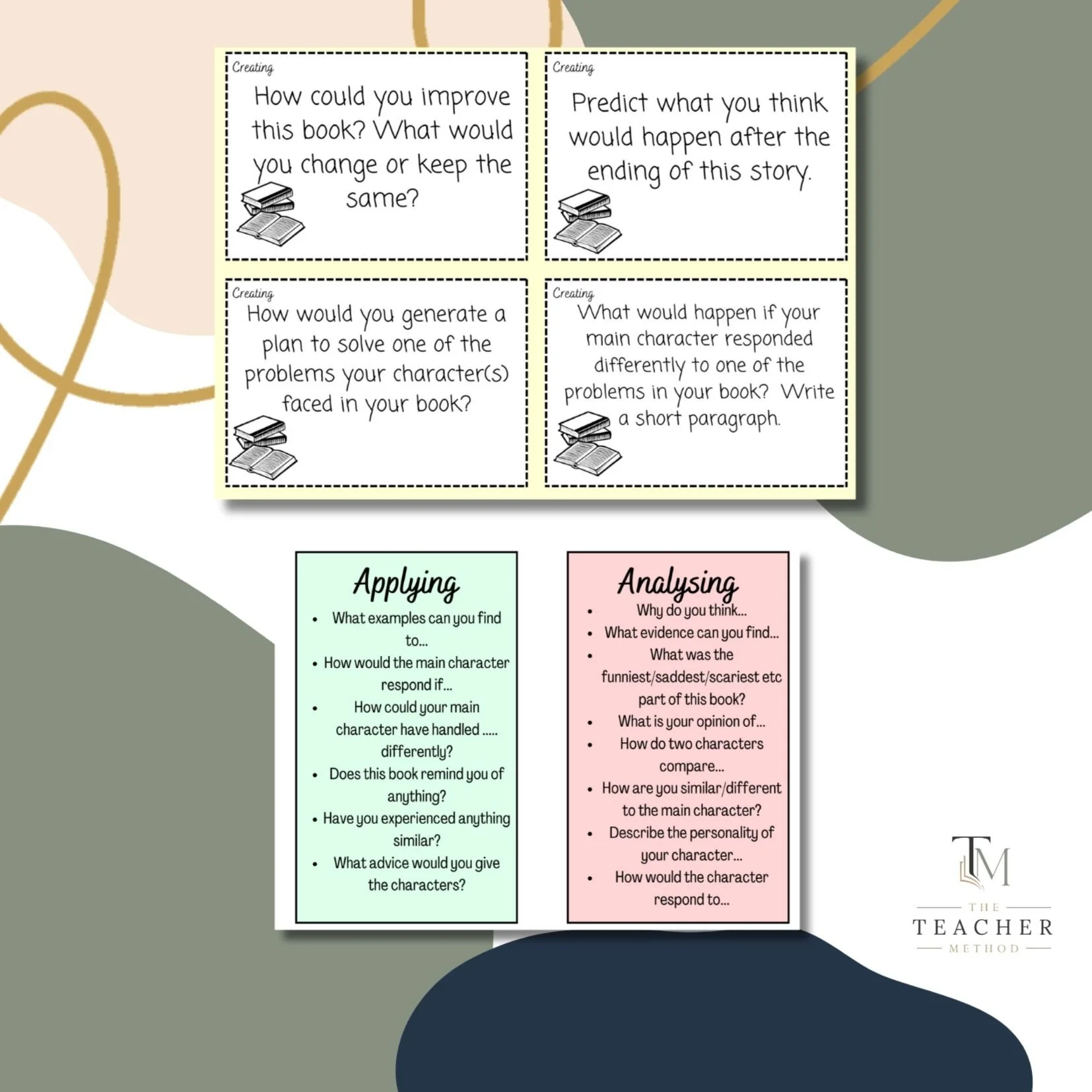
Take reading beyond simple recall with this Bloom's Digital Taxonomy Reading Bundle, packed with flexible resources designed to encourage children to think more deeply, respond creatively and develop meaningful conversations around the books they are reading.
Most suited to first level/early stages of second level.
With a range of colour-coded task cards, question prompts and recording templates, this bundle can be adapted to suit your classroom, your learners and the books you are exploring.
📚 48 Colour-Coded Reading Task Cards
Six different aspects of the Bloom's Digital Taxonomy structure, with 8 tasks for each aspect. Use the cards individually, as part of guided reading, for independent activities, literacy stations or however works best for your learners.
💬 Teacher & Student Question Prompt Cards
Colour-coded prompts that can be laminated and reused during reading sessions or used to encourage meaningful book talk and discussion between students.
📝 Sharing Task Mat
A reusable mat for children to record and share their thinking about what they have read. Simply laminate and use again and again.
⭐ Book Review Template
A structured template that can be used alongside the task cards to encourage children to reflect on and evaluate their reading.
🖼️ Comic Strip & Order of Events Template
A six-space template that can be linked to the task cards and used to sequence key events or retell part of a story.
48 different reading task cards
8 tasks per aspect of the Bloom's Digital Taxonomy structure
Colour-coded resources
Teacher and student question prompts
Reusable sharing task mat
Book review template
Six-space comic strip/order of events template
Colour and black & white versions
British and American English spelling options
Guided reading
Independent reading
Reading comprehension
Literacy stations
Book clubs
Book talk
Reading response activities
Early finishers
Small-group work
Developing higher-order thinking skills
The resources are designed to be flexible rather than prescriptive — choose the cards and activities that best suit your learners and the text you are exploring.
Read it. Think about it. Talk about it. Respond to it.
Digital resource — no physical product will be delivered.
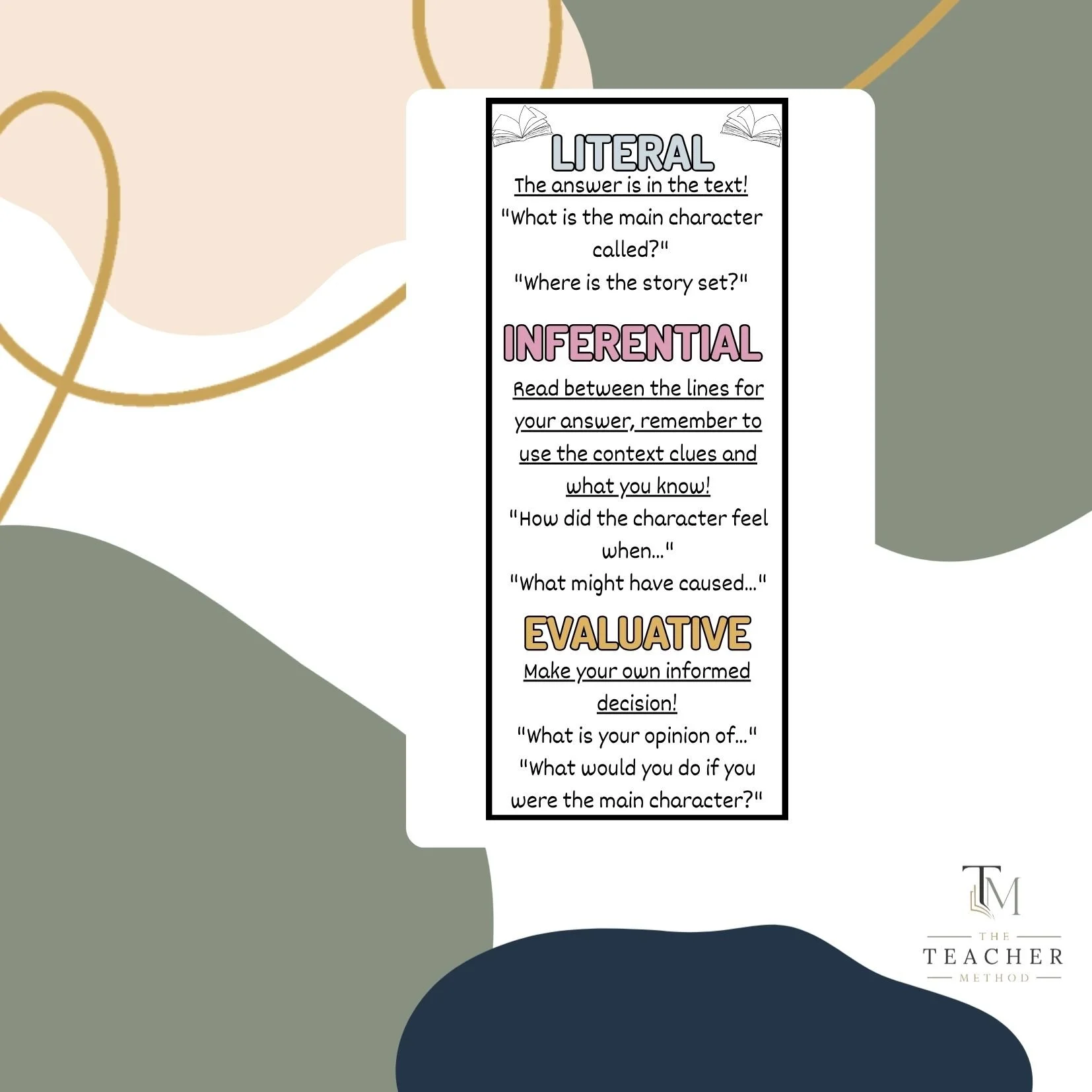
Help children become more confident and independent readers with this Literal, Inferential & Evaluative Questions Bookmark.
Designed as a simple visual reference, the bookmark helps children understand the three key types of questions they may encounter when reading and gives them a reminder of what each question requires them to do.
📖 Literal Questions
Questions where the answer can be found directly in the text.
🔎 Inferential Questions
Questions where children need to use clues from the text alongside their own thinking to work out an answer.
💭 Evaluative Questions
Questions that ask children to form an opinion, make a judgement or evaluate something, using evidence from the text to support their thinking.
Having these prompts readily available helps children move beyond simply finding an answer and begin thinking about how they need to approach different questions.
The bookmark is ideal for:
Guided reading
Reading comprehension
Independent reading
Literacy lessons
Reading journals
Small-group reading
Supporting questioning skills
Developing children's reading strategies
Simply print and give each child their own bookmark to keep inside their reading book, or laminate them for longer-lasting use.
A simple reminder to help children read, think and respond.
Digital resource — no physical product will be delivered.
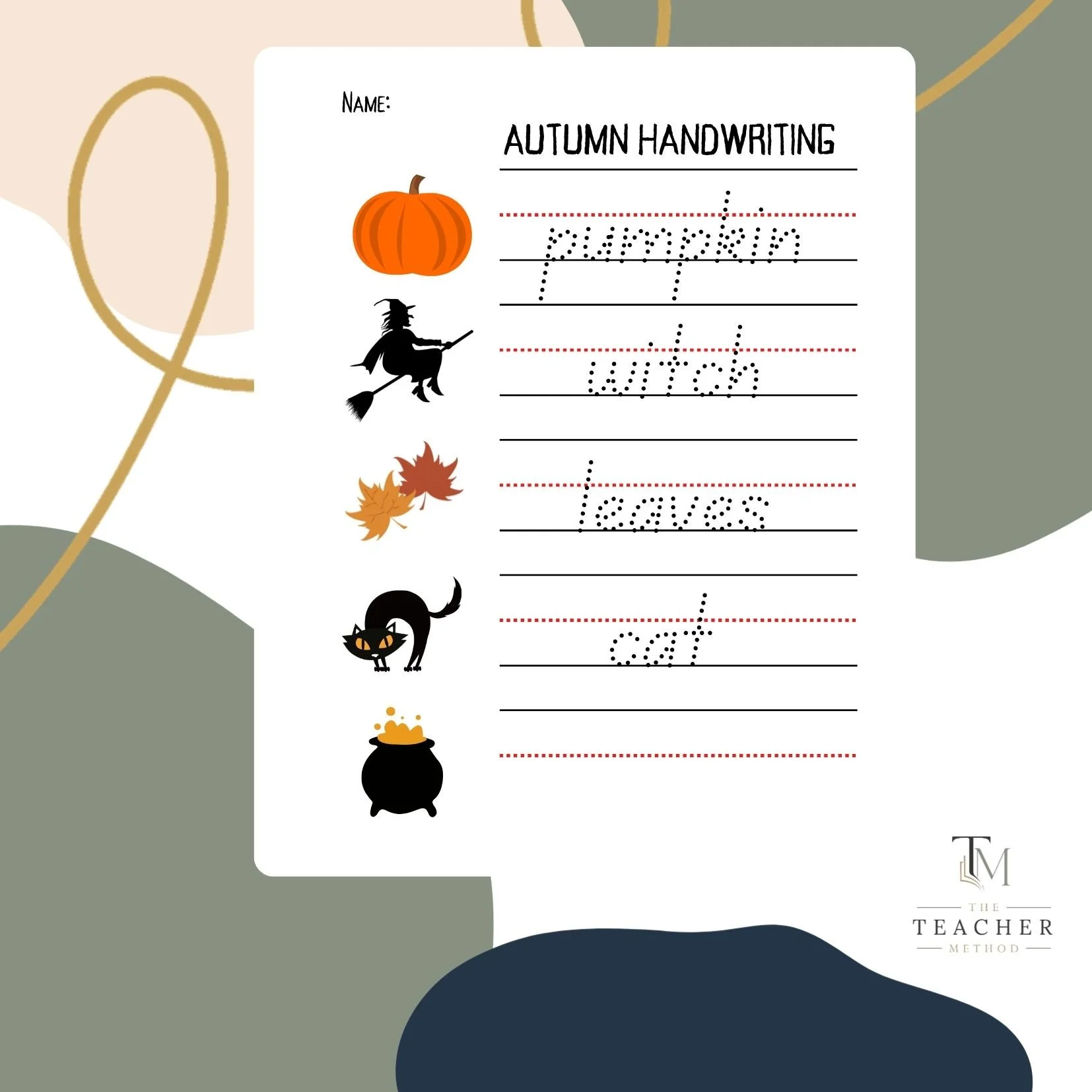
Make handwriting practice a little more seasonal with these autumn-themed handwriting activities, designed to give children an engaging way to practise their letter formation and handwriting skills.
With fun autumn-inspired designs, these sheets are perfect for using throughout the autumn term as part of handwriting practice, literacy rotations, morning work or independent activities.
For a resource you can use again and again, simply laminate the pages and use with a dry-wipe pen. Children can practise, wipe clean and use the sheets repeatedly — making them a practical addition to your classroom.
Handwriting practice
Letter formation
Literacy stations
Independent work
Early finishers
Morning activities
Fine motor practice
Autumn-themed classroom activities
The reusable format makes these particularly useful for classrooms where you want to reduce printing while still providing children with plenty of opportunities to practise.
🍂 Seasonal. Practical. Reusable.
Digital resource — no physical product will be delivered.
No results match your search. Try removing a few filters.